Essays · The Dekolonial Paperz · 11
Sex Aesthetics: The Forms and Signs of Attraction
William Ifeanyi Moore · 5 min
On one level, there is sex (or the lack of it) as a virtue, as we have already glanced over previously. But there is more to the subject of sex than whether to be having it or not. We couldn't tell you why beyond the word "evolution", but for as long as humans have existed — sex has been selling, no matter the controls and regulations forced on it.
The obvious reason is simple: without sex being super attractive, the species might have gone extinct. I mean, the average human gestation period is an entire nine months, and most of the time this ends in a single birth. When you imagine this coming from a time with no medicine and constant conflict for limited resources leading to shorter lifespans, the need for replacement is even higher. Sure, now a lot of us can comfortably live well past seventy years and infant mortality is at an all-time low — so there is no real need to have twenty kids because some will die. But these urges persist. We are just still as horny as we needed to be when breeding was a matter of survival; and spirituality the world over has been trying to contain this instinct as we seek to make meaning out of sex.
Sure, what passes as "sexy" in one culture might not be as sexy in another, but ultimately — these traits are all rooted in the reproductive instinct. For example, even within the same culture, using England for example, let us have a look at pale skin against tanned skin. Once upon a time in the Victorian Era, paleness was where it was at. There was nothing more sexy than a person that looked like they had never seen the sun before. Essentially, a great romantic era for vampires if they existed. Today, tanned skin is in so much demand that people actually risk cancer in sunbeds or slap on tubs of fake tan just to look like they have spent some time in the sun. How are these things both connected to the reproductive instinct?
Having a child with a person that didn't work in the sun in Victorian England meant marrying someone rich enough to never perform manual labour outside, which was the dominant role of the commoners. The higher in life you got, the less sun for you. And if you managed to become a duke or something like that, you got to stay in the palace, ride in a covered carriage, and probably get off at another palace. This life provided security for offspring and hence set the aesthetic standard for skin-tone sexiness in that time.
Flash-forward to 2022, the rich are always on exotic holidays to get away from the misery that is the British weather, so pale skin can no longer remain the standard of attractive skin. Now a tan is in because the commoner works in an office with only 21 days of holiday to see the sun. It is now the rich that can afford to stay in the sun, and so a tan is sexy.


This same idea can be seen in tribes where men with a high waist-to-shoulder ratio are preferred, because it suggests higher athleticism and agility required to survive war and hunting. Today, of course, I don't have to kill a mammoth for breakfast, but these instincts still linger. And you might ask, why hasn't the potbelly taken over as a great sign of wealth? That is because wealth in this era is also associated with fitness. It shows how wealthy you are that you can afford to not just work out, but also eat healthy and even perform surgery if need be. Being out of shape is for commoners who eat high-sugar foods.
This is by no means an exhaustive list, with other sexual signifiers like plump lips, wide hips, a stuck-out tongue, and so much more. But the point is, if you trace these signifiers back — they always lead back to the suggestion of an evolutionary advantage, be it physical fitness or economic advantage.
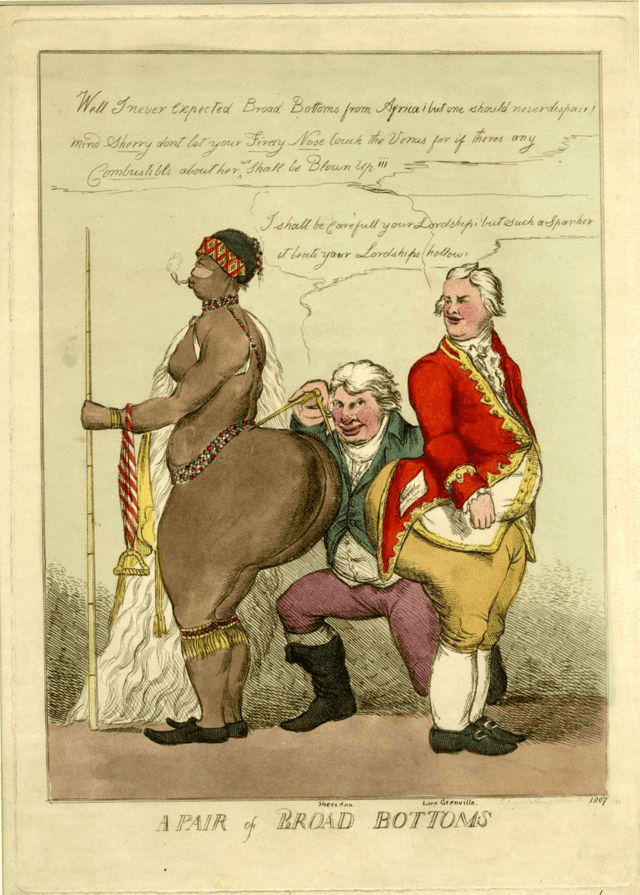
For all the grief given to Africans as we were branded as ugly or apeish, with our women even displayed for body examination and mockery, what we witness today as the Hollywood standard is actually the African standard — bar the straight nose. Lip fillers, butt implants, hip enhancements, thickness — do I need to go on? Everything but the skin colour and the nose. It is almost as if the rest of the world wants to be a black woman, but without the colour. And as for the black man — the levels of fetishisation are the subject for another article, as we are often considered somehow more "primal" and hence better suited for sex, in a manner that easily folds us into objects even if we give in to it freely because well… it's sex.
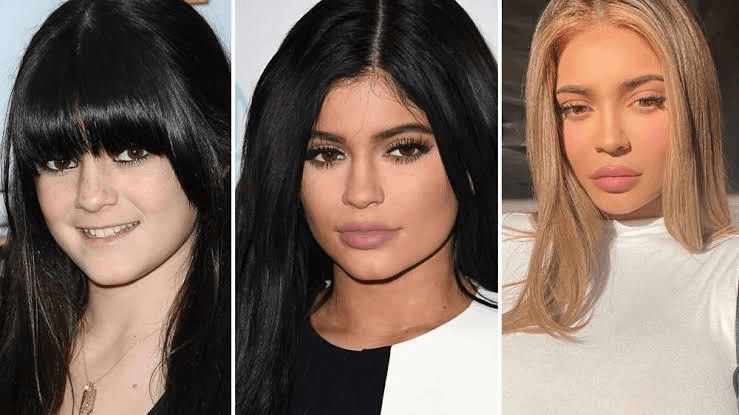
While black men sadly enjoy the trope of the big black (fill in the blank), black women are often trolled for being unattractive while an entire industry thrives off appropriating their natural features. An awareness of this double standard is required, and a rejection of this notion that white is right when it comes to skin, spurring a billion-dollar industry in dangerous chemicals that bleach the skin. Our natural sexiness is enough as it is and need not be referenced against anyone else, least of all an industry that steals from us.
As far as cultural attitudes towards sex go, the world is steadily moving to the pre-colonial African perspective of the body. While conservative Africans today will tell you that showing skin "is not in our culture", you don't have to look very far to see that pre-colonial Africans were very comfortable with their bodies. The notion of raping a woman because she "asked for it" based on her outfit was not even possible, because they just did not conceive of fashion to communicate erotic desires like we do today. It is important here to highlight the difference between the natural, the eroticised, and the profane.
Today, we are saddled with a culture leaning towards body liberation but rooted in conservative religious values. This juxtaposition causes a hostile environment as the religious enforcers will constantly clash with the culture propagators. The matter of colonial-split consciousness will be examined in the next section when we look at how aesthetics relate with identity.