Essays · The Dekolonial Paperz · 09
Understanding the African Aesthetic Criteria
William Ifeanyi Moore · 5 min
For the independent artworks of artists to be able to form a movement, it is expected that they share similar aesthetic criteria that will make them identifiable by the observer. For example, Cubism, as the name suggests, features angular and often cuboid elements in the depiction of scenes and characters. Surrealism bends reality with often psychedelic textures, and Realism tries to stay as true to real life as possible. It is also important to note that these movements often spring up in relation to the dominant philosophy of the time influencing the work of the artist. Hence, Cubism and other modernist styles were born from “modernism”, when truth was considered a computable and objectively observable fact. You even see this in literature, with the extreme case of writers like Ayn Rand pushing Objectivism as a philosophy. Surrealism, on the other hand, presents a more postmodern reality, when Europeans began to question the notion of objective truth. This is also where you begin to see a lot of other cultures influencing European art, with the likes of Picasso even importing Congolese styles to the West.
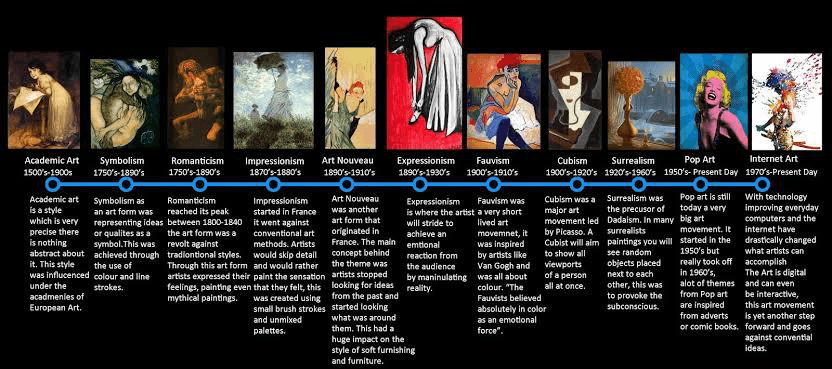
So hopefully that was helpful in demonstrating how thought movements influence art and hence aesthetics. So the question is, what influences African art to exist in the form that it does?
I was beyond enraged with pain as I sat through a panel of African art critics explaining how African art cannot be classified as a movement even though works have enough aesthetic similarity to be identifiable anywhere on the planet. I was enraged by this because it felt like the African intellectual class was waiting on the Europeans to come and name African art as a movement to make it acceptable. As if independently, we could not identify the qualities that made a work African, and then go on to categorise as needed.
At the heart of the African worldview there is a pantheist and animist perception of reality where physical existence is considered a substrate of a much larger and interconnected spiritual foundation.
It is represented largely in the animation of concepts, hence the presentation of even emotions as “spirits”. This pantheist view that doesn’t separate matter a lot from spirit is by nature surreal, but emerging from a spirit-bound cosmology as opposed to an attempt at intellectual contention.
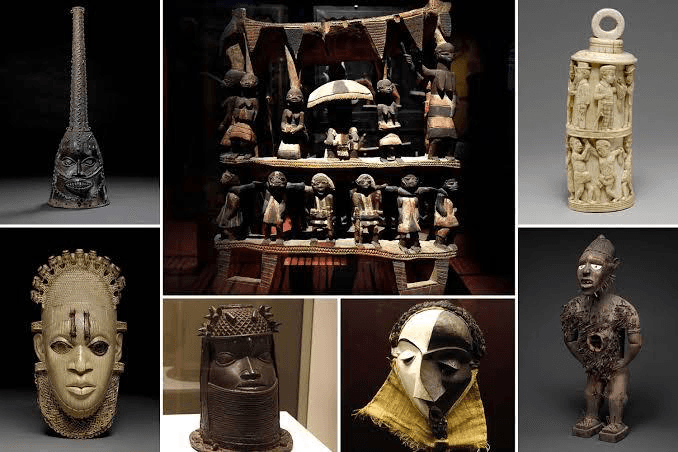
As a part of the cosmologies influencing a particular tribe, integration of certain animals or animal parts is not uncommon for symbolism, and the surrounding pre-colonial aesthetic that doesn’t prioritise angular symmetry is a common feature. If these obvious pointers are not enough to lay the foundation of a continental pre-colonial movement, what will? And there is a clear consistency in these patterns observable across art native to the region. It doesn’t matter where you find African art, you can always tell its origin from its appearance — yet it has a categorisation problem? Even within regions, a trained eye can identify patterns in periods. Or perhaps we need to categorise in a manner that doesn’t give linear time progression supremacy.
In my personal opinion, the reason for this lack of movement attribution is rooted in the idea that these artworks are unconnected manifestations of art for art’s sake just copying one another. This is an acceptable position because the alternative — that the forms and styles were a direct influence of a worldview and hence a movement — would mean that Africans actually possessed an independent worldview that is consistent and communicable. It will put our work on par with every other art piece in the world, and it wouldn’t be for the fetishisation or sentimentality. It would be because it is accepted as a store of value for truth, human truth. The subject of African collections buried in Europe is an issue for another essay. Why do they continue to hold these objects with no value?
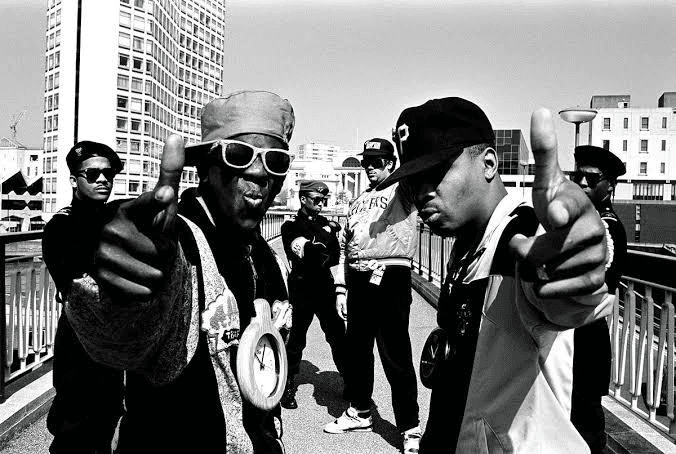
And it doesn’t end in Africa. No. The artistic discrimination found its way to Europe and America following the slaves whose descendants carried the influence of African art to the West. Theodor Adorno of the Frankfurt School, for example, penned an essay about how jazz music fails as music because it doesn’t follow established patterns of syncopation in music theory. And hip-hop music wasn’t accepted at the Grammys for many years because it wasn’t considered “music”. Ben Shapiro, though benefiting from hip-hop culture recently, has for the longest time also maintained that rap is not music. Funny, isn’t it, that these two music forms prioritise improvisation and personalisation, breaking typical “rules” of rhythm as observed by theorists who have clearly defined music based on only their perception of what constitutes harmonic resonance. They had not thought about the possibility of music being both rhythmically inconsistent and consistent at the same time. A common fallout of binary thinking where problems are confronted with the language of “either/or”.
There is a great urgency in the need for Africa to lay ownership to our aesthetics and their features to secure our position in the meta-modern future. If this is not done, other regions will take the kind of credit that has people asking me if Odinani stole the concept of chi and reincarnation from Buddhism. As it seems, it’s really not yours until you have named it in public.