
Essays · The Dekolonial Paperz · 08
Aesthetics and the Colonial Mind: The Sacred, Beautiful, and Profane
William Ifeanyi Moore · 10 min
In its simplest form, I will define aesthetic as the psychological relationship between physical forms and the observer. Depending on an entire spectrum of factors ranging from experience, personality dispositions, and enculturation, to name a few, we learn to experience real emotions as a result of interacting with both symbolic and geometric forms around us. Beauty is singled out by the Western conversation of aesthetic, and hence you will find many writers define it simply as the study of beauty. While I appreciate the effort to wrap up such a complex phenomenon in one neat bow, this laser focus on beauty misses a whole world of what we can learn regarding geometric and lingual forms interacting with the psyche.
In this essay, I will start by saying that every form has its own aesthetics based on the memetic references it can trigger in our mind. A classic example can be seen in the rather cyclical nature of fashion, where a younger generation often adopts a nostalgic form of dressing, as we can see today with the re-emergence of baggy trousers popularised in the early 2000s by rap stars. It also isn’t uncommon to have people develop certain aesthetic preferences from a time and culture they believe resonates with their personality. A friend of mine, for example, is a big fan of the 1950s American housewife fashion and general aesthetic. Of course she was not alive in that time, but her nostalgic imagination of it creates a narrative that works for her personality. But away from fashion…
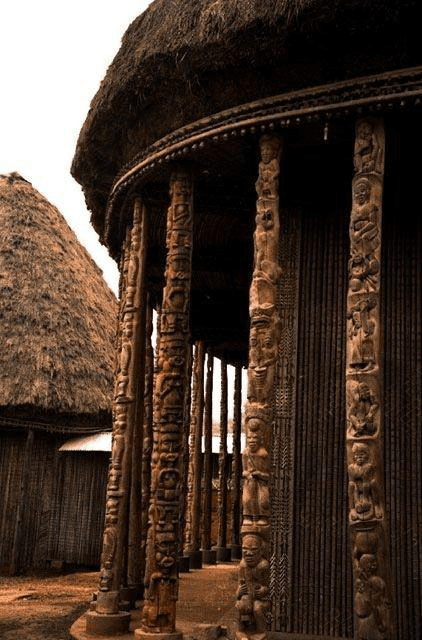
At the base of colonial aesthetic displacement, you guessed it — spirituality was the first to go. Today, a lot of Africans will describe a real feeling of discomfort and fear when placed before most of our ancestral figurines and other such physical representations of our pre-colonial thought and culture. In fact, it isn’t unheard of to this day that church groups and overzealous pastors are quick to cut down sacred groves and set fire to old shrines with effigies now interpreted to be idols or evil. And it isn’t uncommon to hear people actually voice out these figures to look inherently scary. As if the entire pre-colonial civilisation walked around in a constant state of fear, looking from shrine to shrine. Not to mention, the rather surreal and animist aesthetic didn’t stop at the door of any shrine. We adopted this style on door carvings, furniture design, and even architecture. None of this evoked fear in the ancestral mind — why?
Think about a movie where a character is brutally beaten with a crown of razor blades strapped to their head before finally impaling them on a stick to die a slow and painful death. Not fit for children if you ask the censor board. You definitely wouldn’t want to have an impaling stick for a souvenir, unless of course you are a fan of gore-fiction. But there is a popular story about a man being beaten near enough to death before being made to wear a crown of thorns and getting yet more beatings. The man was eventually nailed to a cross (which he had to carry) and his sides pierced with a spear. But this is not a gory tale by any stretch of our aesthetic imagination. Today, that cross is a great souvenir from this age-old event, and even the crown of thorns is a symbol of kingship in a way gold, silver and precious stones could never. This is aesthetics in action.
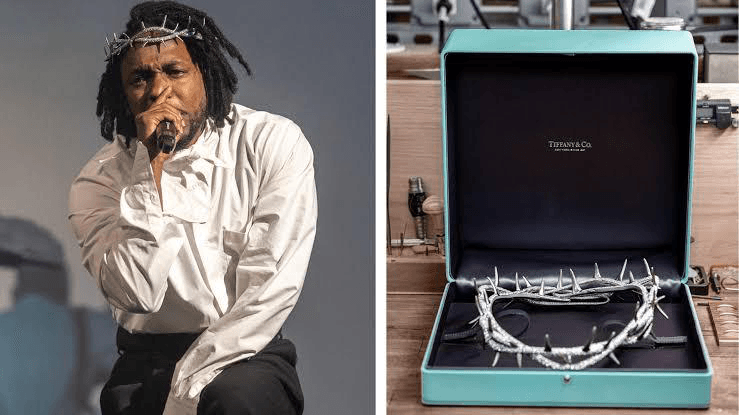
Because how we feel about what we see has more to do with our ideas and experiences around the form, every gory aspect of the crucifix has been converted to a display of sacrifice instead of something that could have featured in the Saw series. People actually forget the crucifixion was a common way of dishing out capital punishment in that time and in that culture. Basically, if Jesus came to modern-day America and had to be executed by the state, we would be wearing icons of electric chairs or lethal injections on our necks. It might sound absolutely bizarre, but it just is what it is. We perceive Christian symbols as we do because of the meanings ascribed to them. We see this in the case of holy communion, where believers are expected to eat bread and wine as representations of flesh and blood. If I told you there was a little group of people that gathered once a month down the road from my house to be fed bread and wine standing in as flesh and blood — you might even advise me to get the police involved to put an end to such cultish behaviour. I mean, how long till they start using real people, right? But this too is normalised, as is the baptism by water (but God forbid you bathe in Osun’s river to cleanse yourself).
When the role is reversed, we have been taught almost to see every aspect of our culture as the demonic aspect of Christianity. The actual figure of the devil has been literally made out to be Ekwensu (Igbo) or Esu (Yoruba), and shrines have gone from being private worship spaces to houses of evil idols. Most interestingly, the ram/goat horn symbols representative of the Will in many pre-colonial African cosmologies found themselves in Europe and the wider West as a major symbol in Satanism. If you look into the works of someone like Aleister Crowley, largely regarded as one of the greater Satanist thinkers, you will see a lot of emphasis on the role of the Will in life. In fact, Do What Thou Wilt is considered the most sacred law in this belief system. This rather esoteric sect has spawned a whole category of aesthetics presenting as far as the Gothic in modern times, where typically Christian tropes are subverted to darker inclinations awash with vampires and other demon-style creatures killable by holy water, silver crosses and so on.
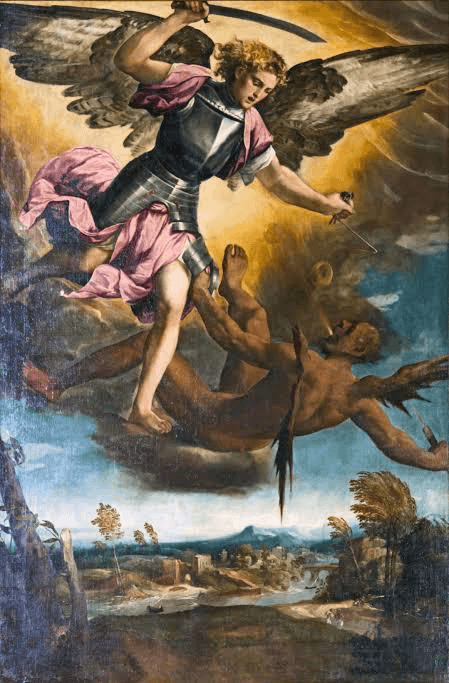
We also see this subversion with Lucifer, who though supposed to be an angel with a voice to die for, is presented with many physical differences from the likes of Gabriel and Michael. For one, he has horns. His skin is red or black, he has a random tail now ending with a strange triangle, and let’s not even go into his bat wings that replaced the dove wings; his sharp teeth and rather unmanicured nails. These changes in physical form are key because the brain will not know how to accommodate a lack of difference from the ideal while trying to recall that one is more or less the opposite of the other. And while we are on the subject, we might as well address the aesthetic choices that made Jesus Christ a white man.
While the uninitiated might assume that Middle Eastern men 2,000 years ago carried European-sounding names like Mark and Matthew, the learned know this to be far from the case. Moses, for example, is referred to as Musa in the Quran, and Jesus is called Isa in the same book. Sadly, one even has to explain to believers today that Allah is just Arabic for God, as some Nigerian Christians conceive the Muslim “God” to be somewhat a different entity not conceptually consistent with the Christian God. This happens due to the heavy Euronisation of Christianity, and yes, the depiction of a white, long-haired and often blue-eyed Jesus sprung out of a need to keep man’s ideal in the “master” race as the whites assumed themselves to be.
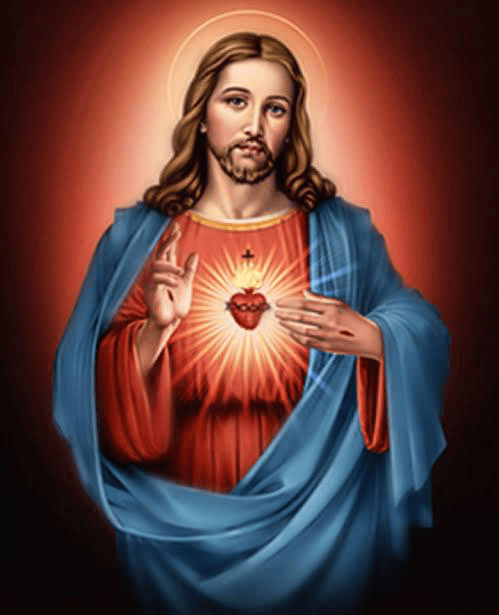
You might call this only a minor aesthetic adjustment, but if you are Nigerian (or Christian outside of the Middle East), I invite you to a thought experiment. Imagine that it is Sunday, and you have dripped in your most holy swag, only to step into your place of worship and find that in an effort to stick closer to history, the preacher has changed every image of Jesus Christ to resemble someone that reminds you more of Bin Laden than Jared Leto. Do you think there would be at all any change in how the symbol of Christ is received? Would people feel as comfortable with a Jesus more freshly baked bread of life than cream wafer communion snack, knowing fully well that historically speaking — if you adopt a literal interpretation — Christ is from a desert tribe in the Middle East?
It is important to note that the practice of adapting the Christ figure to a host race is not uncommon. Many theologians and scholars aware of the effects of symbolism and memetic association know that any figure of worship is best adapted to the believer’s race as a way of centering their own identity as central to their beliefs. Even in Japan, where no colonisation ever took place, the adoption of Christianity featured artworks depicting Christ as Japanese. However, the problem with being colonised is that you don’t get to make these choices, so a spiritual system isn’t just forced on you. Rather, a perverted version of that system designed to keep you at a psychological disadvantage is forced on you. For all the areas of convergence and divergence we see between Christian philosophy and African philosophies, a residual image of a black Jesus along with the cast of disciples and other characters would have produced a completely different power relation between black Christian Africans and white people generally north of the Atlantic. The conversation for black Muslim Africans and how their orientation on race is different will have to come in another essay. But I will point out that North Africa and Northern Nigeria have more in common when it comes to cultural perceptions compared to Northern Nigeria and any other region in the country.
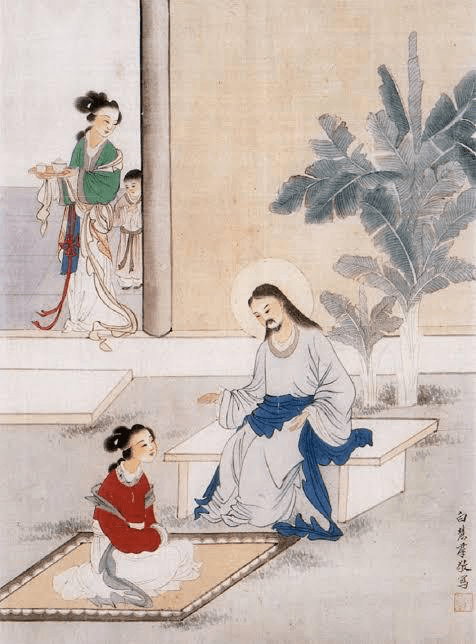
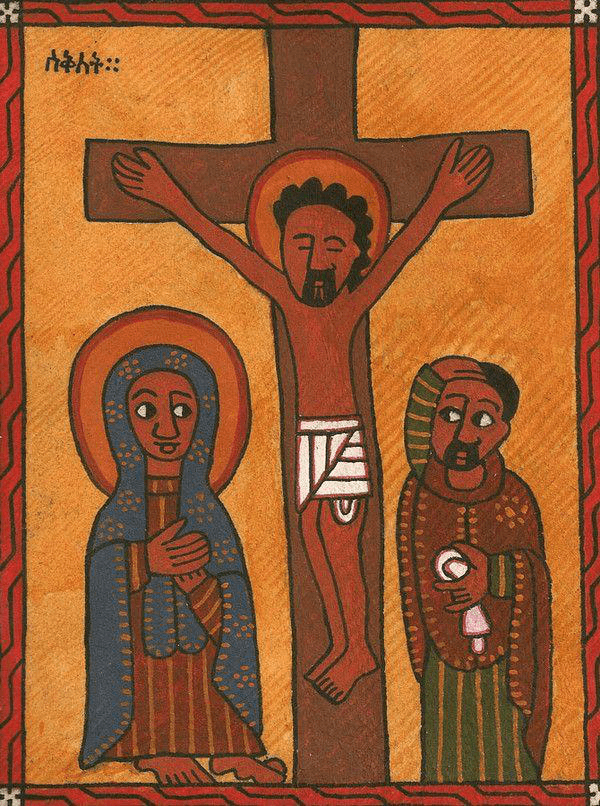
Today in many homes around Africa, we say that there are no “shrines”. But we have no scarcity of personal altars where spaces are carved out with crosses, olive oil, holy water, a bible and some other religious apparatus. These “personal altars” stand in as a space for prayer and worship — but we just refuse to call them Christian shrines because in language, the word “shrine” carries a pre-colonial connotation, and any relation with that can feel almost like a violent denial of the popularly practised Christianity thanks to our colonial condition. Can you even imagine the discomfort the average African will have visiting a friend to encounter a carving, some nzu, kola nuts and whatever else makes up a traditional altar?
At the time of this writing, discomfort, rejection and fear are some of the dominant feelings that will arise. And it is not unheard of that traditionalists have been mobbed by Christians in communities as a way of “cleansing” the space, with claims of the traditionalists being responsible for sufferings caused by their “evil” practices. So deeply rooted is the breaking and debasing of the pre-colonial aesthetic from the African mind that even the aesthetic criteria that make African art identifiable are considered somewhat “dark natured”.