
Essays · The Dekolonial Paperz · 07
Economics: The Factory of Resource Control
William Ifeanyi Moore · 5 min
All roads lead to the gold chase — welcome to material capitalism.
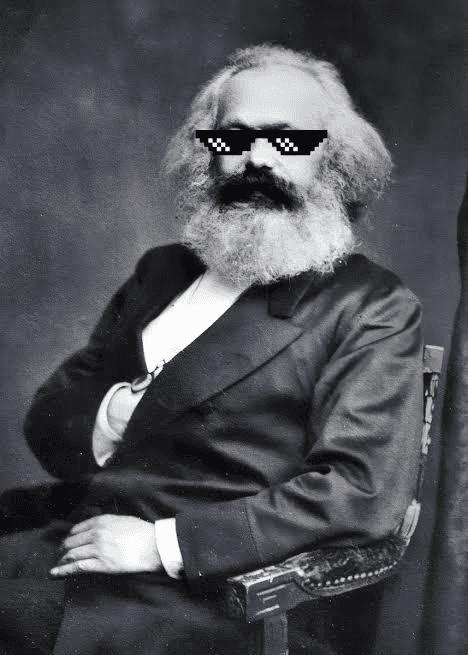
Karl Marx made an argument that still rages on today about the economy of a state forming the basest foundation of its culture as what he termed — the superstructure. He labelled popular religion as the opium of the people, as a tool of subjugation to keep the people docile while power acted as it saw fit. And perhaps he has a point. At the root of so much behaviour, economic reasons can be seen silently pulling strings that mould our tastes and aspirations.
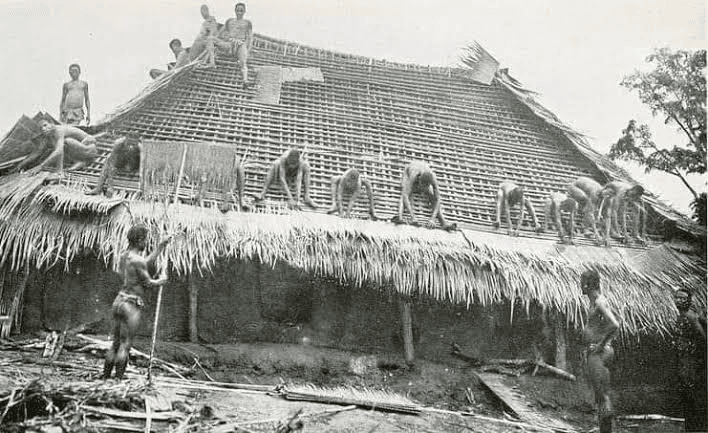
Starting from the most basic, the concept of land ownership. In many pre-colonial African cultures, the notion that a person could own land as property was alien. One could use land, and own it while they used it, but the concept of buying land as property and trading it simply didn’t exist. The land was conceived to belong to everyone, and so when a man was of age, he was given land to start his family, and men in his age group even saw to the building of his home. He would gather more land based on what he could farm and how he might extend his home with wives and children. But at the very least, he would not be without a home. Then suddenly, the land became the property of Her Majesty and we got introduced to a capital-based, speculative trading economy.
Can you even begin to imagine the mental shift from being raised in a tribe where homelessness was impossible because land was for all, to the current system we run now where every plot is for sale and you could be shut out of ever owning a piece if you cannot come up with the capital? Of course, power was not evenly distributed, with men typically having more access to land, but the realisation of a less sexist Africa would have been one that accommodated women in the privilege of men and not one that subjects both to suffering.
On paper, there is a “freedom” sold with this idea of atomisation of the individual with a capital-based relationship connecting us to the world. It lies in the promise that if you work hard enough, the system will reward you with enough capital to live however you see fit. But the price is competition for everything as we all slowly become New York-style cities where attempts to familiarise with one’s next-door neighbours may be considered rude in the context of culture. This is already how I live in Lagos, where I couldn’t tell you anything regarding my neighbours besides maybe the cars they drive. And that’s a weak maybe.
The ultimate usurping of the tribal mentality with its community leanings for the capitalist mentality with its individual leanings ensures the perpetuation of colonial economics, which eventually determines the mode of power distribution. At once, the value system of the economy is oriented to serve not necessarily what is most valuable regarding social cohesion and growth, but what is most valuable regarding profit maximisation. We see the reduction of everything, measured against its usefulness in economic terms. People become tools, land becomes resource, everything a means to an end for anyone able to facilitate capital exchange.
It is predicted that eventually we will have to work out some sort of universal basic income because machines and AI will be doing so much that there just wouldn’t be enough space for even the most willing humans. Now of course, the likes of Oscar Wilde have long dreamed of the social utopia with his work The Soul of Man Under Socialism, and he is not alone in this idea that humans have to be freed from the strangulation of capital. When this happens, it will be touted as revolutionary in a sense. It will be forgotten that Africans had long reached a place of economic balance where land as a basic means of production was afforded to everyone universally.
Africa to this day remains a resource-abundant territory, even if mismanagement continues to plague the economies. With optimal management, there is no reason why we shouldn’t be able to operate from a place of abundance like many Arab nations boasting primarily of oil-and-gas-style resources compared to our range of minerals.
Rethinking the economic culture of African countries to position us to better optimise human flourishing will require interrogation into the hyper-corrupt brand of capitalism prevalent in many African states.
Summary
With the spiritual system displaced, the school curriculum in the image and likeness of the West, the economic model thriving with capitalism, and the media construed — the work of the restitution is long and hard, but it is work that must be done. There are so many modern problems already with their solutions hidden in African pre-colonial practices. For example, the European philosopher and founder of the School of Life tries to host secular Sunday services as a way to foster the need for congregation in the atheist space. This is a clear situation of reaching into the past to build the future. Meta-modernism without pre-colonial African integration will remain quite incomplete and unable to become the overarching narrative it is supposed to be for universality.