Essays · The Dekolonial Paperz · 05
Church: The Factory of Virtue Control
William Ifeanyi Moore · 7 min
The evolving faces of the Western feminine ideal
While the intellect is directed by means of education, the spirit is bound with thoughts of religion. When I use the term spirit in this context, it is not to signify an immaterial thing that lives inside us, but to conceptualise the forces that pull at our moral engines (conscience), setting ideal standards of “the good” within ourselves and the culture at large.
For example, it is in the spirit of conservative Christian ethics that homophobia and aggression towards anyone not “cis” gendered can be regarded as a fruit of the faith. And if you have spent much time studying religions and spiritual practices all around the world, you will find that regardless of the differences in execution, they are generally psycho-social tools designed to propagate growth, stability, and sustainability, while trying to maximise the human experience towards a version of idealism. Hence, it forms the backdrop of what is considered ethical and worthy of reward, and what is unethical and deserving of suppression.
In Africa, Christianity, which is still being practised today on a major scale, perhaps has the longest history of perversion for the benefit of colonialists. We see this as early as the days of slavery, where it was used to admonish slaves to obey their masters. To propagate the idea that the reward of the obedient is in heaven and all earthly suffering is only transient.
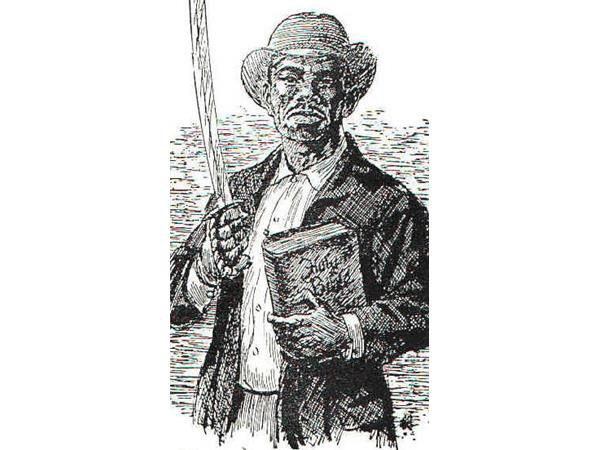
At this point, I must make the distinction between the truth of any religion and the functionalist approach it is given when administered primarily as a system of control. To put this into perspective, one may consider the historical Jesus to have been a contrarian and a rebel, ultimately killed by the state for fear of his threat to their monopoly on power by preaching radical individualism and personal salvation. This can be true in theory, but in reality, Christianity was never imported into Africa to save the soul of the black man. Rather, it was an imperial import packaged to encourage submission and to establish dominance and control.
Till this day, we see this perversion of religion in prosperity gospel posing as a representation of the real Christianity, but only existing to enrich a few. I make these distinctions for religion because every idea undergoes these distortions of meaning and function in the hands of subjective applicators after their own ends.
So what were the ends of the colonialists bringing in Christianity?
With the success of Christianity as the mental component for binding slaves psychologically, it was already a tried and tested tool of control, and it would come to show what it could really do in the colonial project. Debasing the native religions and cosmologies developed to fulfil the native culture’s needs, Christianity was instilled primarily as an instrument of control, replacing the precolonial ethical framework and existential orientation.
To put this into perspective, traditional Igbo cosmology upheld the notion that ethics are relative, with a popular saying that the gods of a people understand their own language. This meant that the notion of forcefully converting or even evangelising could not materialise in the culture because tenets of the dominant cosmology made room for many versions of truth, unlike the Christian doctrine where Jesus is described as the way, truth and light, with the punishment of eternal damnation waiting for anyone that believes otherwise.
We also see changes in the method of orientation, with the infinite moving from the personal to the public. In precolonial cosmologies, priests and other highly regarded characters existed, but mostly in secluded places that did not invite mass gatherings. Often, a trip to such places required a pressing issue the person believed to require the insight and wisdom of a priest. You may also think of this as having issues you believe a clinical psychologist will have to help with. This meant for the most part, there was no “pastor” to interpret and lay emphasis on any of the religious codes. In place of public churches, personal shrines were more popular for reflection and meditation.
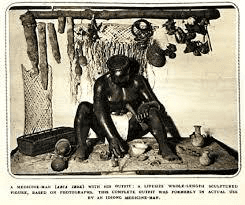
These sorts of displacements in both belief and cultural practices ultimately culminate in a twisted form of anomie where the culture begins to gut itself because it struggles with resolving contradictions between two worldviews. Till this day, we see this tension in African societies where on one day we might regard an action as ethically right via the African culture, then turn to Christianity the next day to declare it wrong. You see this in how the bodies of women are policed with the introduction of “modesty” as a virtue, teaching that the body is a thing to hide and be shameful of. This wasn’t the case in many African tribes where bare breasts were a regular part of the sights you see. Now we aren’t sure if a crop top is morally justified because our ancestors would have approved, or maybe it’s a no-no, because the Victorian conservative version of Christianity we inherited can’t free the proverbial nipple.
Another example can be seen in the Igbo practice of returning the dowry upon mistreatment of a daughter in marriage. When the dowry is returned, the marriage is dissolved and the woman is free. In Christianity, we have to navigate the idea that the Bible brands divorcing as some great sin, and places the safety of the woman under the sanctity of the union. It might appear a small cultural shift, but these little changes in perception materialised a thousandfold in action. Thank the stars for civil courts or marriage would have been a one-way street regardless of what suffering it might bring.
In the modular form Christianity has taken thanks to the rise of different denominations and the advent of Pentecostalism, today, we can see a range of virtue standards, from the no-earring, long-skirt, and headscarf mother-of-virtue sects, to the gen-z-friendly runway-style Sunday hashtag slayday churches. While this doesn’t quite get as atomic as individual approaches popular in pre-colonial Africa, it at least allows some tailoring to taste.

Last but by no means least, there is my personal most problematic of all the spiritual reorientations, and that is the matter of moral authority. Before the advent of colonialism, personal morality governing personal choices like drinking, appearance, and even sexual activity was left to the individual and their own conscience. There was a real respect of personal choices, and not even “the gods” tried to govern that. But with Christianity, society saw the governing of these choices, removing authority from the individual to live and let live in a manner that accommodated differences. But it didn’t even stop there. When God was not the presiding authority, the Europeans introduced the idea that we could also depend on priests for understanding and interpretation, further pushing the population away from the activity of personal discovery as we rely more on “men of God”.
Quick example of the sort of moral interference I am talking about. Did you know it is called the missionary position because the missionaries declared it the only acceptable sexual position, as any variation of the doggystyle was considered perverted because that’s how animals did it? Now you know.
Summary
The result of this modern spirit enterprise is a population that has placed their spiritual growth in the hands of another human, while also policing others that choose to be individuals to fall in line with a new generalised moral code supposed to govern personal life. Without the realisation that we are each called individually to be our authentic selves on our own spiritual journey. And even if Christianity dies as it has in many Western nations, its shadow lives on in the culture, creating the dependencies of God on the state and surrendering authority to it. Social justice conquests are the new holy wars. And so the cycle continues. Africans need to pivot back to our origin of individuality where distinctions were clear on what comprised social duties and personal choices. Neither the state nor a mob of citizens should be policing personal choices.