Essays · The Dekolonial Paperz · 06
Media: The Factory of Influence Control
William Ifeanyi Moore · 9 min
Different brain, same program…
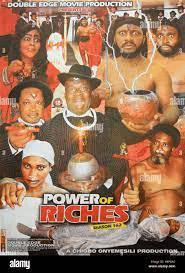
While the church or mosque (religion) plays the role of foundational virtue-setting for a philosophical ideal, the media picks up in the refining of taste for a material ideal. This is particularly true in societies where religious influence on media is little. Of course, sometimes the philosophical ideal and material ideal are the same, and that is when you get the onslaught of African-spirituality-shaming films that flowed out of Nigeria through the '90s, forming the basis of the miracle-heavy Pentecostalism still gripping the country today. But what does it actually mean when one says the media is a factory of influence propagating the material ideal over the philosophical?
Bouncing off the example already stated regarding Pentecostalism: these movies were often funded by the church, and rather than the writers performing any research to better represent African spirituality, the aim is to further the position of the church.
The result is capital gains both for the sponsors and the film producers, who can bank on these rather uninformed movies to rake in cash due to the psychological predisposition of the population. We see this same issue play out on social media, where a post that might have an edifying feature is trumped by basic sexualised aesthetics because the algorithm prioritises what will make the most money, not what will yield the most social growth. These were the standard depictions of native spiritual practices most millennials will be familiar with — a strong continuation of the colonial project via mass media.
So bad is the capital infiltration that even in the news meant to inform citizens, profit margins now decide the spin on a story because sponsors demand it, and even the viewer is now more attuned to the news as a source of emotional enragement. There's just more money in presenting the news as a clash of parties, be it along gender, political, or socio-economic lines. The principal anchor for decision-making, even in the press, is no longer about informing the citizen or holding reasonable debate with nuance and context. For goodness' sake, most news cycles now run on a fifteen-minute loop. That is about enough to scratch the surface on any one issue, but the entire segment gets to share this.
With capital control so strong on media direction, and media expanding into the social space — making each of us a little journalist and publisher — the place of African representation has never been so important. We see attempts in fiction where African "gods" are cast in these comic-style heroic archetypes alongside Thor and whatever else, but even these representations are at best stereotypes or caricatures. As it stands, bar the success of a few great African writers in the novel space, authentic presentation of African thought is yet to become a media sensation. For the most part, African representation in the media has carried the prejudices that built African capitalism, often relegating anything pre-colonial to meaningless.
So deep is the separation of African thought from what is acceptable or even believable that being pro-African-philosophy feels like an act of revolution — as if there is an existing burden of proof to demonstrate that pre-colonial Africans practised philosophy. Can you even imagine how it feels to have the history of thought of an entire race called into question? The suggestions of popular words like juju categorising entire cosmological thought systems into meaningless gibberish. Even in supposed intellectual spaces, you see the categorisation of "magical realism" representing African works that would have at best passed as surrealist fiction. This is a result of the exotic fetishisation of African thought as "different". You wouldn't call a novel centred on Buddhist thought "magical realism", even if it includes themes like reincarnation, astral projection, and other non-material elements of Buddhist thought. It is also for this reason that Sigmund Freud gets to read dreams and it is presented as science, but any pre-colonial African doing it is a witch doctor. Witch, in this case, denoting magic — anything but a consistent and valid thought system.

Carl Jung gets to present the concept of archetypes and the collective unconscious within what is accepted within an intellectual framework, but the notion of representing the archetype of creativity via a "goddess", for example, has no room for intellectual validity. From the intellectual media (publishing) to the wider mass-entertainment vehicle that is the screen, African thought is presented generally as a terrible simulacrum — a presentation of a copy that is far away from the original.
We see this in stories of civilisation where Africans are cast as savage or primitive, where technology is exalted as the pinnacle of civil progress while it paradoxically plays the role of oppressive machinery with quotes like "No matter what they say, we have the Maxim Gun". We see it in the emphasis on magical thinking when African viewpoints are presented. Sure, there is a presentation of Christianity that is literal and quite magical if you have read the Bible, but higher-order symbolic interpretations have existed even further back than the interpretations of the Masons. We see Genesis not as a literal story of two people in a physical garden, but as a tale about gaining consciousness by encountering the difference between good and evil. These sorts of meanings allow actors like Jordan Peterson to frame the religion within a more robust logical space, because any magic like walking on water is understood to be symbolic and not literal. But when we discuss African creation myth, we do not even create room to acknowledge that perhaps the creators of these myths meant for them to have deeper meaning buried in the symbols used.

The American writer Chris Hedges and the professor Cornel West both refer to themselves as champions of the Judeo-Christian tradition, but you will not find the literal belief in miracles in their interpretation. Rather, their focus is on the prophetic tradition of Christ — speaking truth to power and willing to stand for faith in truth, even at the point of pain or death. This is a summarisation, of course, but you get the point. There is a freedom enjoyed by other religions, allowing for multilayered interpretation and recognition of meaning, not enjoyed by African spirituality, which is often boxed into a caricature of itself.
With the new media becoming more and more independent, there is hope for better presentation of African thought systems, and I can already see this on some YouTube pages.
For anyone interested in Igbo cosmology, I would definitely recommend TheMedicineShell and SirusTheGoat. Whether we like it or not, video and audio are becoming the dominant medium in directing the cultural influence space. This means that we will need more accurate presentation on all levels, from the foundational intellectual grounding all the way to the mass-adopted representation in fictional stories. If you consume videos from young Western intellectuals, you will find a lot of their references within the scope of the Western literary canon, with the likes of Nietzsche, Jung, Baudrillard, and Foucault never quite far from mention. African young intellectuals lack these reference points for African philosophies and primarily still face the task of proper representation, from which future references will then be made. It is my hope that at some point in my lifetime, groups will sprout with African philosopher memes on Facebook — because then, I will know for sure cultural penetration has reached its digital peak.

With globalisation on steroids, Africa must over-extend our media presence further than music and film propagating only our material conditions. Of course, it is understandable that the same way capital controls an industry like rap to produce more sex, drugs, and vibes songs over more lyrically in-depth or culturally aware music, the same struggle is presented with the African philosopher trying to hack into the mass-media space. In fact, you even see people showing interest and pride in African historical achievements being described as Hoteps in a derogatory way. What is the slang term for the Easterner obsessed with Chinese pre-colonial history and traditions? What do we call white people in love with the Greece and Rome of antiquity, or what we now call the classical era?
I recall someone asking my co-writer on the Sky Sage why a train existed within the context of a high-fantasy African novel. To think that African thought and possibilities had been pinned down so much that having a train (which already exists in real life) is considered "unAfrican". But a European writer can dream up technologies like time machines and it is allowed in Western fantasy, because there really is no boundary to what can be attributed to Western intelligence. Of course, we see Eastern fantasy animations like Avatar with trains and no one questions why Asians have trains, even though we know the Industrial Revolution was a European affair. This is because there is an acceptance in the media space that Asians are capable of technological thought and progress. Africans are not.
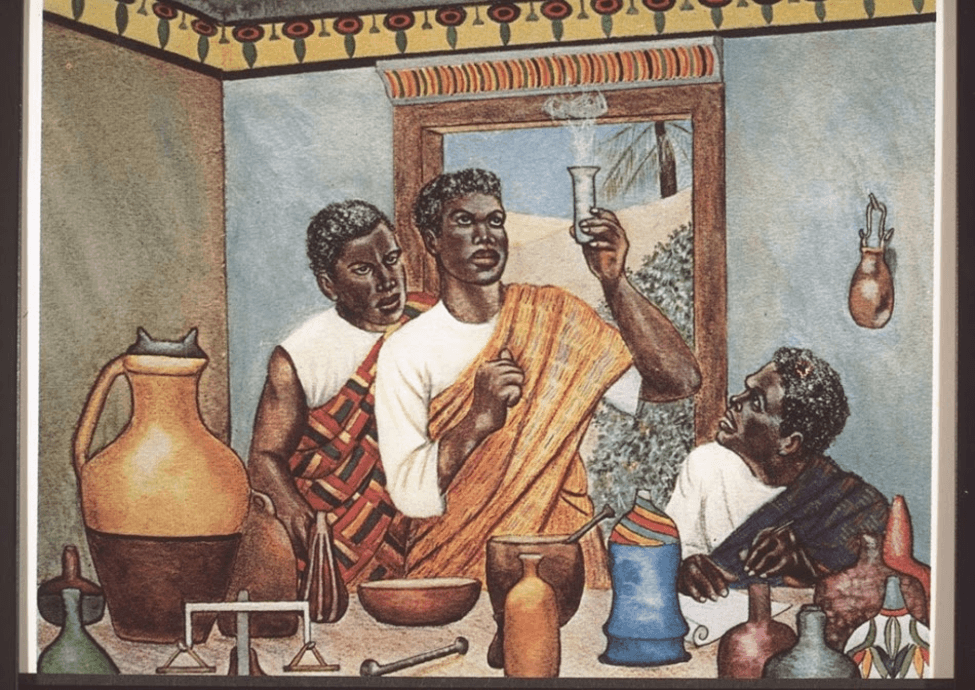
Often I wonder: if the pyramids and other such African civilisation structures and artefacts were completely destroyed or uprooted to Europe, what would it really take anyone to believe pre-colonial Africans had anywhere near the understanding of mathematics, architecture, and physics to make these things happen? But think about the pre-colonial Chinese, the Arabs — how easy is it to imagine their civilisation as sophisticated even before Western contact. This is what generations of media misconstruction set as the standard of perception.
With technology increasing access to storytelling by cutting costs and routes to distribution, there is still an uphill battle when it comes to getting funding and promotion for African stories; but all things considered, we are finally in a space where retelling from our own perspective is now a real possibility.